M-PRISM research
Optimizing radioisotope production at MURR
Development and Validation of an OpenMC/Fission-Matrix Methodology for Real-Time Prediction and Optimization of Target Irradiation and Isotope Yields
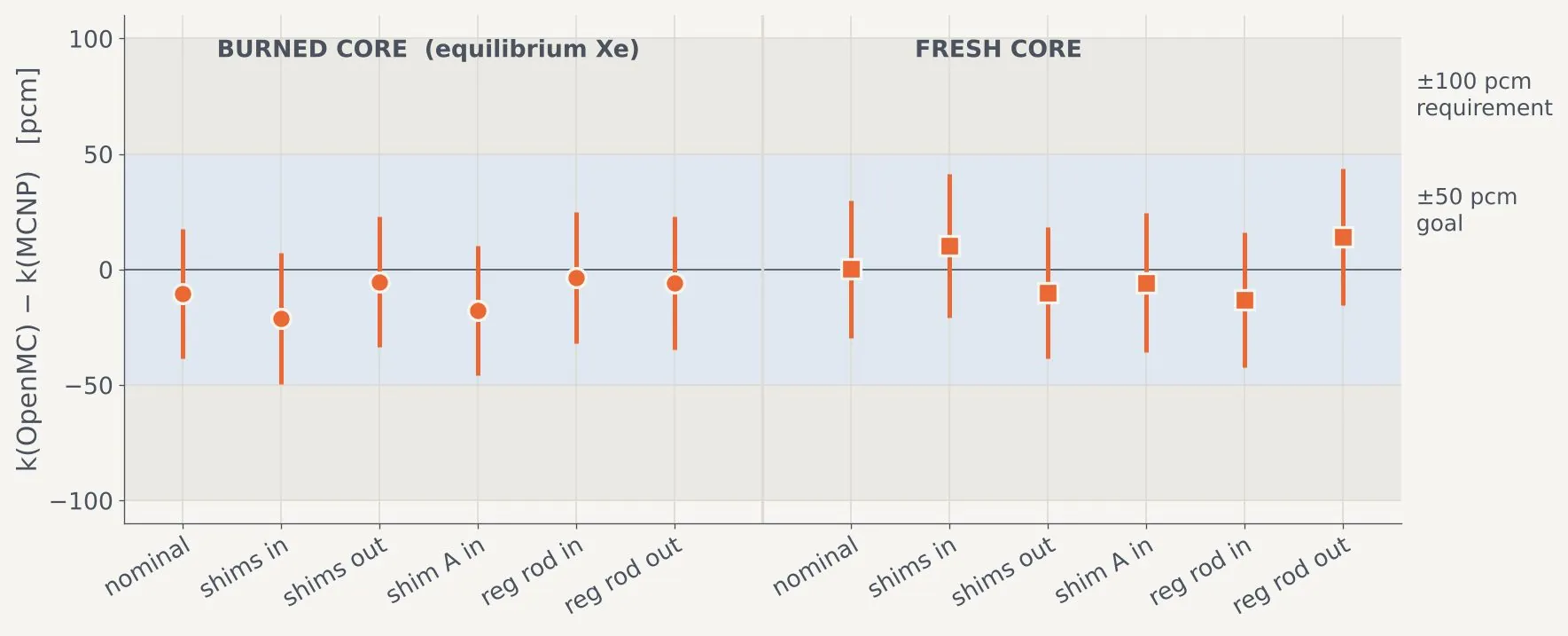
Our OpenMC model of MURR agrees with MCNP to within 50 pcm in all 12 core and blade states.
The University of Missouri Research Reactor (MURR) runs about 6.5 days a week and must refuel and place targets within about 12 hours. That is too short for high-fidelity transport, so irradiation planning relies on spreadsheet methods.
The aim is real-time prediction and optimization of target irradiation and isotope yields. The planned method precomputes fission-matrix and detector-response data with OpenMC. A machine-learning inverse solver searches these data for loadings that meet an irradiation goal. The fission-matrix physics engine scores every candidate.
Undergraduate Ethan Mohr built the first piece: an OpenMC model of MURR verified against MCNP 6.3.1, with blade worths within 0.25%. Validation against MURR measurements is next.